
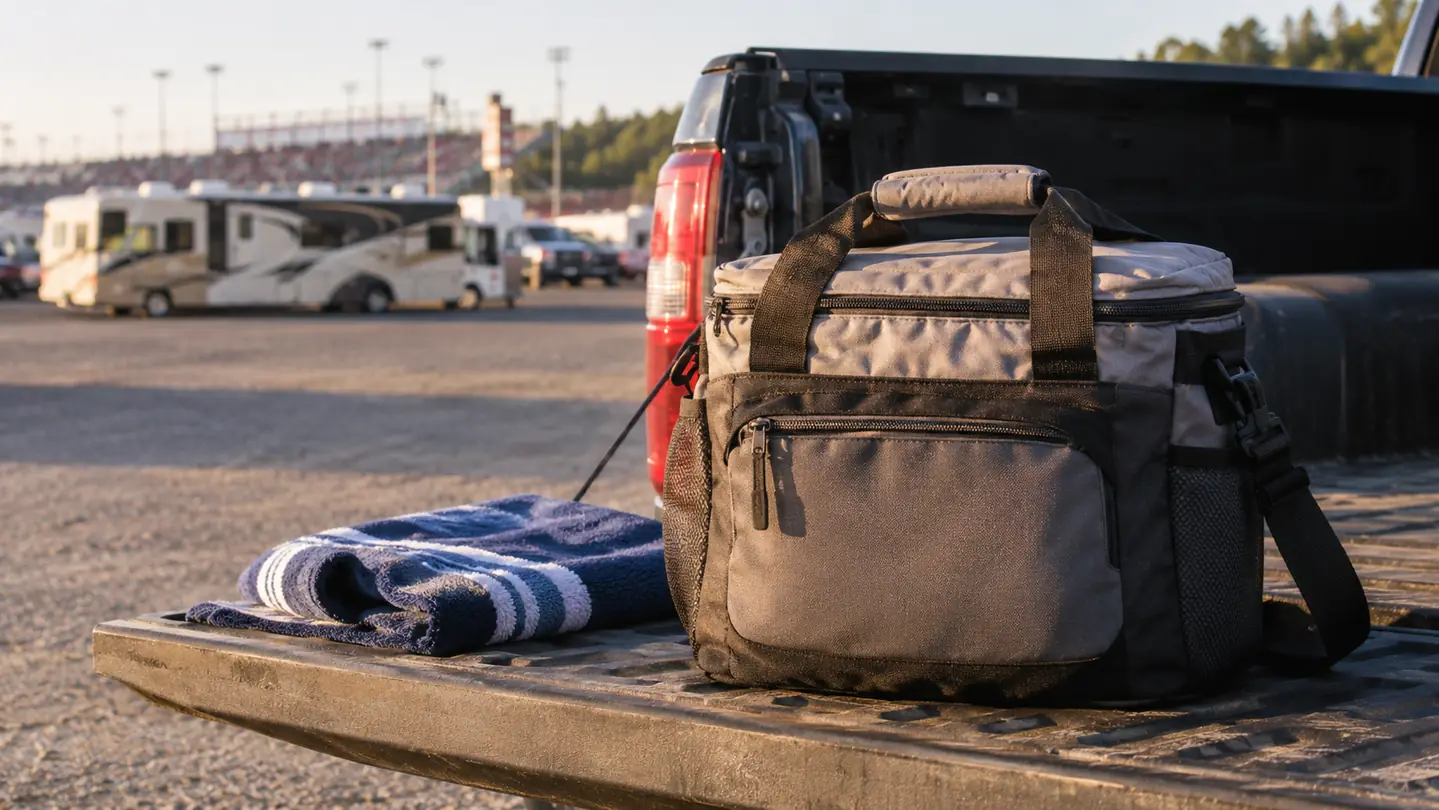
A cooler is the easiest thing in your race gear to get wrong. Not because packing one is hard. Because everything about a track works against it. You park a long way from your gate, you sit in the sun for six hours, and the bag of ice you packed at seven in the morning is a puddle by the time the field takes the green.
I've carried the same Under Armour Sideline Pro soft cooler into the spring race at Bristol and the fall race at Talladega for two seasons now. It's the 12-can size, 13.5 inches wide, 11.5 tall and 8 deep, a little over a pound empty. Two seasons in, the zippers still close the way they should and the coated outer fabric still wipes clean with a damp rag. What I've figured out is that packing order matters more than the bag itself, and most folks do it backward. One thing before we start, though. Check your own track's posted cooler policy before you pack a single item. Size limits and what gets through the gate change by track and sometimes by race weekend, and no article, this one included, can tell you what your gate will allow. Look it up the week you go.
The soft cooler that has lasted two full seasons of grandstand duty
12 cans plus ice, an insulated quick-access lid, two exterior zip pockets, built-in fence hooks and a lifetime warranty. Mine has been through Bristol in the spring and Talladega in the fall without a zipper failure.
Amazon Check Today's Price on Amazon →Step 1: Freeze a bottle instead of dumping in loose ice
Loose cubes are how people end up with a cooler full of cold soup. They melt fast, the water gets into everything, and by the middle of the race you're drinking a warm sports drink that has been floating in a puddle since lap 60. I did that for years before it occurred to me that the problem wasn't the cooler.
What works better is cold coming from two directions. One frozen 32-ounce bottle of water stands in the bottom of the bag. A quart zip bag of cubes sits above the food, not around it. The bottle holds cold for hours and, just as important, it doesn't soak your sandwiches. When it finally melts, you still have drinking water, which matters more than people expect on a ninety-degree Sunday with no shade over your row.
The rigid interior liner on the Under Armour cooler is the other half of this. It isn't fabric you can soak through, and when something does leak, you wipe it out with a paper towel in the parking lot instead of leaving it to sit in the truck overnight. I've done both versions, and the wipe-it-out version smells a lot better the following weekend.
The first spring we took the bag to Bristol, I did it the old way: a bag of cubes dumped in the bottom, cans pushed down into it, sandwiches stacked on top. It was 58 degrees when we left the hotel and about 84 by the time the race started, and by the middle of the afternoon there was an inch and a half of water in the bottom of the bag and the bottom round of sandwiches had gone soft. I poured it out in a trash barrel by the concourse and drank warm soda for the rest of the day. The cooler held up fine. The way I packed it did not.
Step 2: Chill everything the night before
A cooler doesn't cool anything. It only holds what is already cold. Anything you drop in at room temperature steals cold from your ice for the first two hours, and those are exactly the hours you spend walking to the gate and standing in a security line.
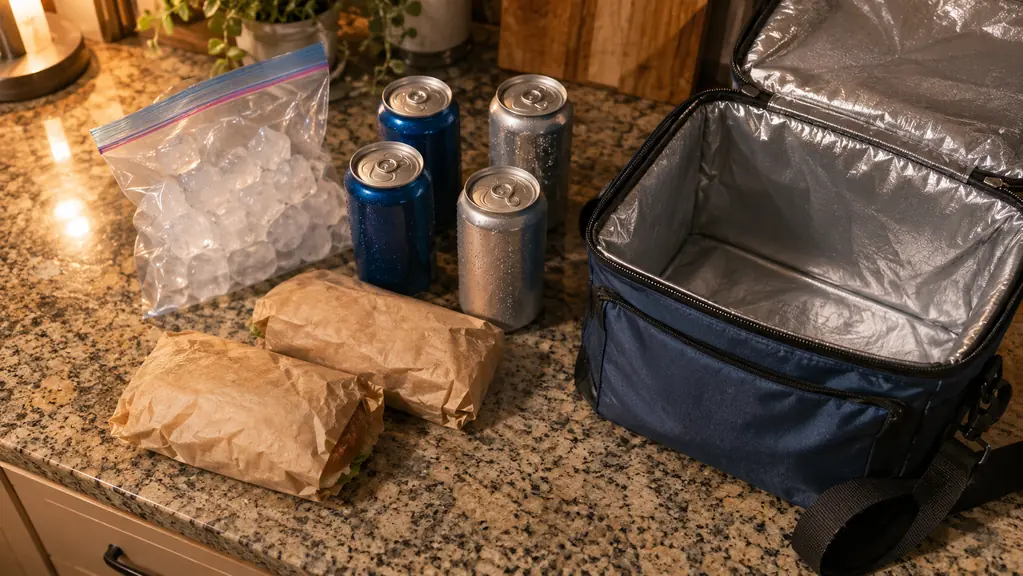
So the night before, the cans move to the fridge, the big bottle goes in the freezer, and the food gets laid out. Linda handles the food side of it: sandwiches wrapped in paper, a bag of grapes, pretzels, a couple of cheese sticks. All of it spends the night cold and comes out cold in the morning. The cooler itself sits open on the counter with the lid propped, so it isn't starting the day closed up and warm from the kitchen.
The one thing I don't chill early is the bag of cubes. That comes out of the freezer last, right before we load the truck. Cubes that sit on the counter while you make coffee and hunt for your sunglasses are already half gone before they ever see the bag.
Friday night is when this happens at our house, because Saturday we're on the road by 5:40 in the morning. The cans go in the fridge door, the food goes on a shelf where I'll see it, and the empty cooler gets propped open on the counter overnight. I made the mistake once of leaving the closed bag in the truck bed overnight before a Talladega trip, thinking the cool night air would do the work for me. It didn't. The bag sat there warm and shut, and the ice was half melted before we hit the interstate. Now it sleeps in the kitchen with the lid open.
Step 3: Load it bottom-heavy and keep the reach-for items on top
Here's the order, and it's the same every time. Frozen bottle flat on the bottom. Food next, packed tight to one side. The bag of cubes worked into the gaps. Cans standing upright on top.
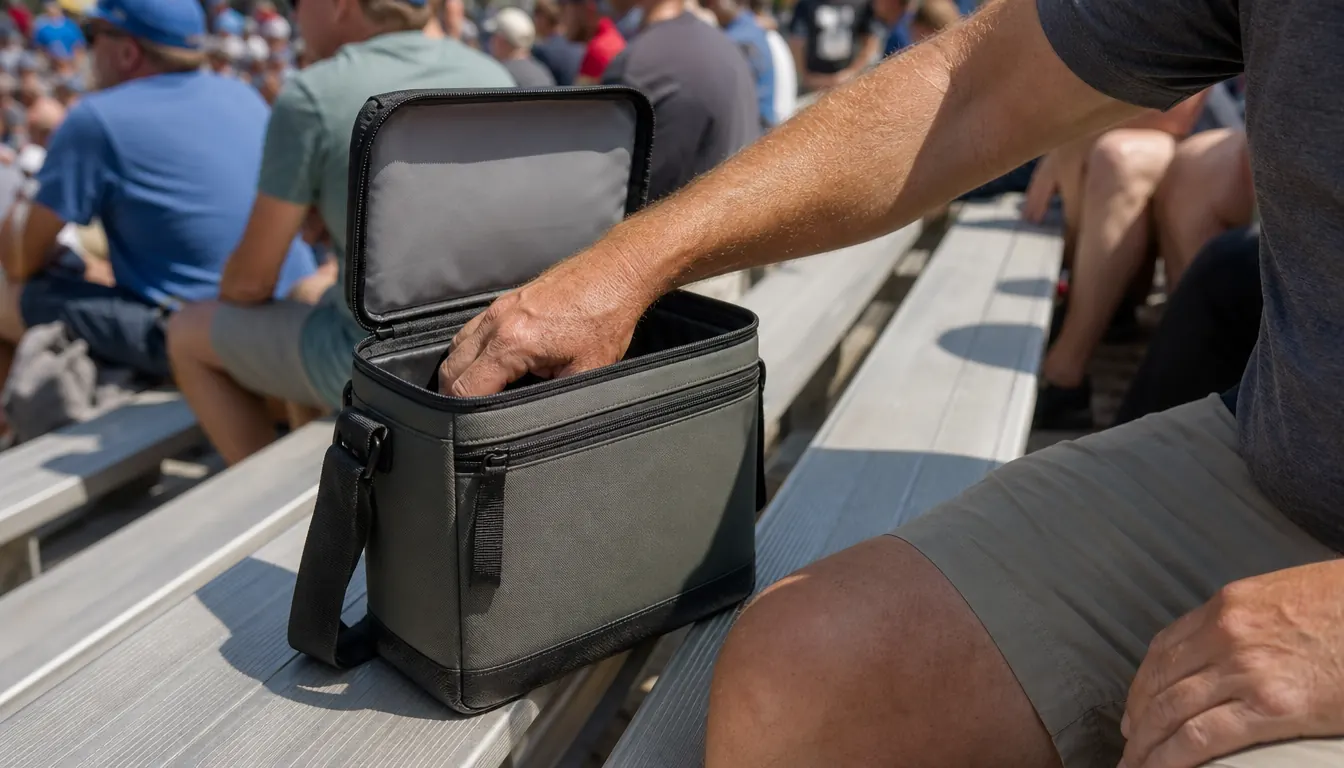
Cans on top is not an accident. The insulated quick-access lid is the whole reason this bag works in a grandstand. You flip the top panel, pull out a cold one, and close it again without unpacking the bottom half. Every time you open the full lid instead, you dump cold air into the parking lot and buy yourself a warmer drink later in the afternoon.
Fill the dead space while you're at it. Air is the enemy in a cooler. If there's a hollow between the sandwiches and the side wall, that's where another handful of cubes goes, or a folded dish towel. The listing puts capacity at 12 or 24 cans with room for ice, which is optimistic if you pack food the way we do. Count on 12 cans, a bag of cubes and a few sandwiches, and let the rest stay in the truck.
I also got it wrong for a while by laying cans down on their sides to make them fit tighter. It looks efficient, and it does mean more of them fit in that 13.5 by 8 inch footprint, but a can on its side rolls and knocks into everything else every time the bag shifts, and you can't read a label without pulling three of them out first. Standing them up, shoulder to shoulder, holds them still. I can look down through the open lid and see exactly what I'm reaching for, which in a crowded row means I'm not standing there with my arm in the bag while the whole section watches a restart.
A cold drink at the start of the race is easy. A cold drink at lap 300 is the whole trick, and the answer is a frozen bottle at the bottom that nobody touches until the last hour.
Step 4: Use the two zip pockets for everything that isn't cold
I ignored the two exterior zip pockets on the Under Armour bag for a whole season. That was a mistake. The front pocket now holds napkins, a koozie, sunscreen and a couple of granola bars. The back pocket holds spare batteries for my scanner and my phone when I'm not holding it.
Keeping that stuff out of the cold chamber matters more than it sounds. Batteries fade in the cold. Phones fog up with condensation every time you pull them out into the sun. Napkins that have been sitting next to ice are not napkins anymore.
Then there are the built-in fence hooks, which turn the bag into grandstand furniture. Where the seating has a railing in front of it, I hang the cooler off the rail instead of setting it on the concrete, where it ends up in somebody's shadow and gets kicked every time the row stands up. Where there's no rail, it rides on the bench between my knee and the aisle, and I keep a hand on the comfort haul handle when the crowd gets up for a caution. Hanging it also keeps it out of the standing water that finds every concourse by the second half of the day.
Step 5: Pack it in the truck so it rides level and out of the sun
We drive down in a 2016 Silverado, and the cooler rides behind the front seat on the floor, level, with a towel thrown over it. Not in the bed on a hot afternoon and not up in the back window. A bag sitting in direct sun in a parking lot for five hours before the race loses more cold than it should, and there's no getting that back once the green flag drops.
If you get there early and you're parked on the grass or in the infield, pop the tailgate and let the bag sit in that shade. Small thing. Buys you a couple of hours.
Plan the walk, too. A 12-can bag with ice and a bottle is not heavy, but it's one more thing on a hike that already includes two stadium seats and whatever else Linda decides she needs. Pack lighter than you think you should. Whatever you carry in, you carry out, and the walk back to the truck after 400 laps is genuinely the longest part of the day. That isn't the cooler's fault. It's just the truth about a race weekend.
What Else Helps
The cooler is one piece of a day that starts in a parking lot at breakfast and ends with a dark walk back to the truck. The other pieces that have earned a permanent spot in ours: a stadium seat with a back on it, because aluminum benches and a bad left knee are a bad pairing; foam earplugs for Linda; and a hat with a brim, because spring at Bristol and fall at Talladega are two different kinds of sun.
Bring a trash bag. Ice bags, wrappers and empty cans have to go somewhere, and the cooler pockets are for things you want to keep, not things you want to haul out. I keep a grocery sack folded in the front pocket, and it has never once been the thing I forgot.
We also learned to make the last walk easier by packing out what we pack in. The bag comes home with empty cans and a wet zip bag of nothing, and that bag gets emptied into the barrel by the gate on the way out instead of riding home in the truck. Two seasons of that habit means the cooler doesn't smell like a locker room by July. Give the inside a wipe with a damp rag when you get home, leave the lid open to dry overnight, and it's ready when the next race weekend comes around.
Freeze a second, smaller bottle and drop it in the back pocket on the way through the gate. It stays cold against the outside of the bag, it's drinkable by the time the race gets interesting, and it costs you nothing but freezer space.
And drink more than you think you need out there. The bag's only job is to make that easy. One that still has a cold bottle in it at lap 300 has done everything you can ask of it.
Two seasons, two tracks, and it still shuts the way it did on day one
The Under Armour Sideline Pro holds 12 cans with ice, wipes clean, hangs off a railing and carries a lifetime warranty. Check your track's policy, pack it in the order above, and you'll have something cold when it counts.
Amazon Check Today's Price on Amazon →