
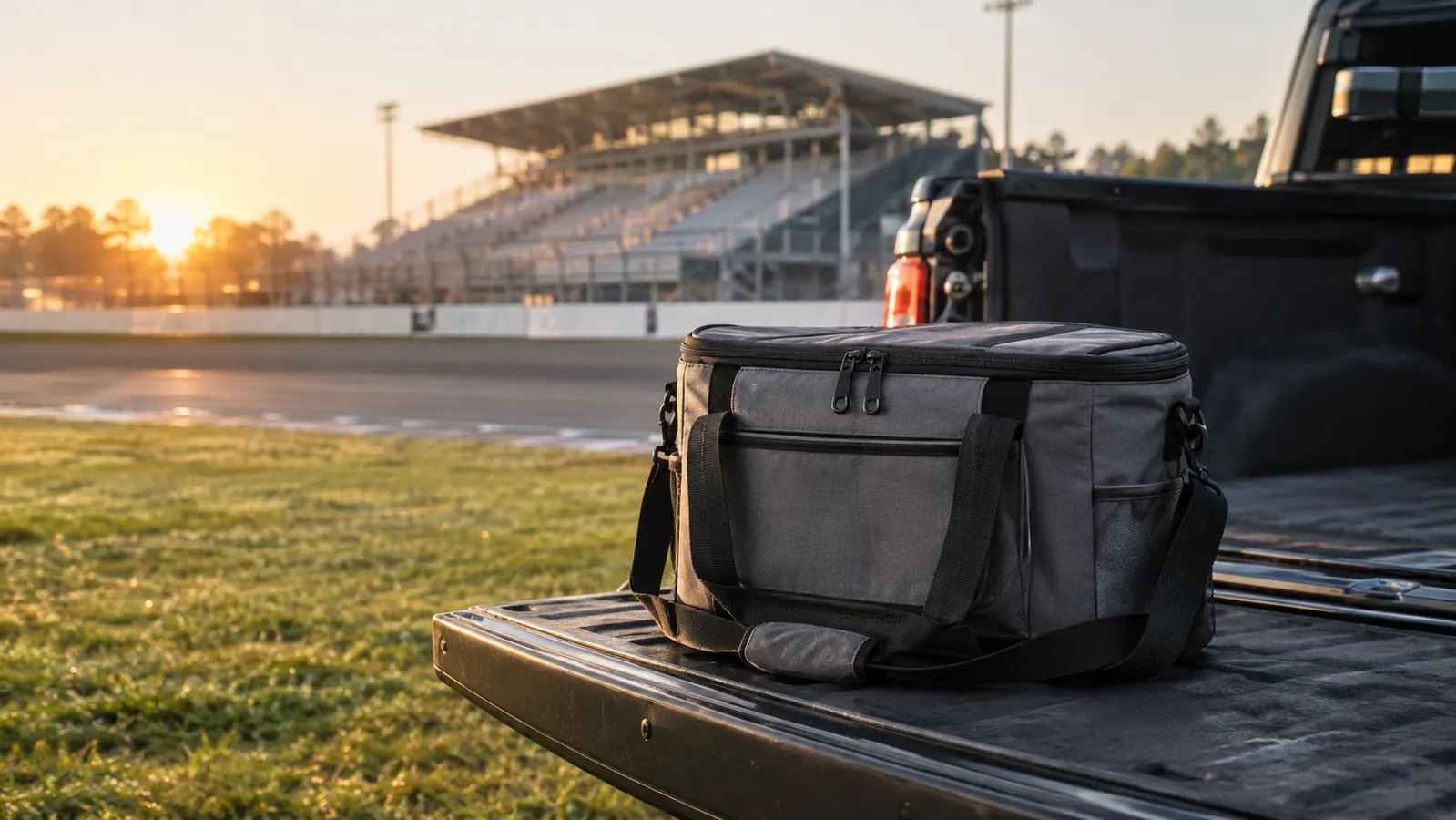
The walk from the hotel lot to the Bristol gate is about three quarters of a mile, and the last stretch is uphill. I know that because I have made it with a cooler in one hand and a stadium seat in the other, on a left knee that has been filing complaints since I retired from the shop. Two seasons back I got tired of buying a cheap cooler every spring and watching it come apart by fall, so I bought the Under Armour Sideline Pro and made myself a deal. I would carry it to every race I attend, the spring race at Bristol and the fall race at Talladega, until it quit or I did. It has not quit.
What follows is not a first-weekend impression. I have hauled this thing through hotel parking lots, up grandstand steps, and across a wet infield at Talladega. I have filled it from a hotel ice machine at six in the morning and dumped the meltwater into a lot drain at nine at night. If you are the type who reads the one-star reviews first, good. So do I. Here is the honest version, including the part about the ice.
The Quick Verdict
Two seasons, four race weekends, one cooler that still zips. It keeps a day's drinks cold and it carries like a bag instead of a box. The ice is water by midafternoon, and 12 cans runs out fast if you are packing for two thirsty people.
Amazon Check Today's Price →The one piece of race gear I have not replaced in two seasons
Carried to Bristol and Talladega, up the steps and back down, and it still zips. Take a look at the current listing before your next trip.
Amazon Check Today's Price on Amazon →How I've Used It
Two seasons, four race weekends. Spring Bristol twice and fall Talladega twice. Linda and I stay in a hotel for both, so the cooler spends the night in the back seat of my Silverado and gets filled from the ice machine down the hall by the elevator. That is not the version of race day people post pictures of, but it is the version a cooler actually has to survive.
At the track it does three jobs. It carries drinks from the truck to the seats. It sits at my feet for six hours and gets opened by two people what feels like a hundred times. And it holds whatever we bought at the souvenir trailers so we are not making a second trip back to the truck. I have also used it on a handful of ordinary Saturdays, in the truck bed for a family cookout, and once on a fishing trip with a buddy from work who brought no cooler of his own and drank most of mine.
The first trip was spring Bristol, two seasons back. I had the cooler in my right hand, the stadium seat over my left shoulder, and my scanner clipped to my belt. Halfway up the ramp I stopped to switch hands, and a man behind me asked if it was my first time. It was not. It was just the first time I had made that walk without a hard cooler handle cutting into my fingers. I reached our row with my wind still in me, which had not happened in years. That is most of the review in one paragraph, and everything after this is detail.
I want to be clear about something I am not going to tell you. I am not going to tell you it fits your track's cooler rules, because I do not know your track's rules, and neither does anybody selling you a cooler. Bristol and Talladega each post a cooler policy, and they are not the same policy. Read yours before you pack. Every year I watch somebody get turned around at the gate with a hard-sided cooler the size of a dishwasher, and every year that person looks genuinely surprised.
What 12 Cans Actually Means on a Race Day
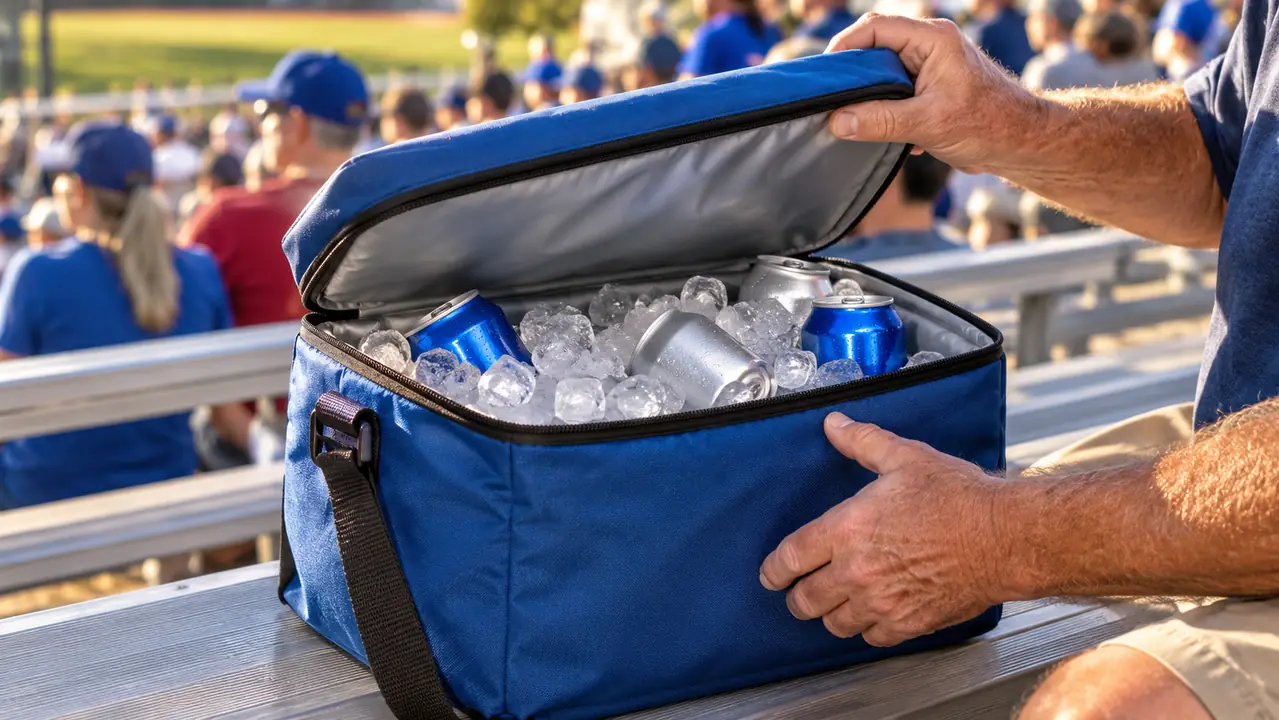
The listing carries two sizes, a 12 can and a 24 can. Mine is the 12 can. Measured, it is 13.5 inches wide, 11.5 inches tall and 8 inches deep, and it weighs about a pound empty, so nearly all the weight you carry in is weight you put in it. That is the whole reason the Under Armour bag works for me. I am 61 with a knee that does not straighten all the way, and a loaded hard cooler of the same capacity is a two-hand carry with a stop halfway to switch hands.
Before this I carried a hard plastic cooler of roughly the same capacity, and it did the cold job better. What it would not do was walk. It had a molded handle that fit two fingers, and by the top of the Bristol ramp my fingers were done and I was carrying it against my hip, which is worse for a bad knee than carrying it in my hand. I gave it to a neighbor who backs his truck up to the gate and never walks more than forty yards to anything. He is welcome to it.
Twelve cans plus ice is realistic, and I will tell you what realistic means in practice. For two people across a long afternoon, twelve drinks is about right. If Linda brings a friend, or one of the kids drives down for the weekend, twelve is not enough and I am buying bottled water from a vendor by the fourth caution. The 24 can version exists for exactly that reason. I did not buy it, because I am the one carrying it up the steps, and there comes a point where capacity turns into a chore.
The shape deserves a sentence. It is taller than it is deep, so it sits on the aluminum bench beside me instead of swallowing the whole seat, and it stays put on the floorboard of the truck when I take the turn out of the hotel lot. A wide flat cooler of the same capacity would do neither of those things.
The Lid, the Ice, and a Hot Afternoon at Talladega
The lid is the insulated quick-access kind that flips open on top. That sounds like a small thing until you have spent a day with a cooler that only opens from the end. With one of those you stand up, lean over, and dig past six cans to find the one you want, and by then the race has moved on. With this one you reach down without looking, you are back in your seat in two seconds, and the cold does not all leave the bag while you are deciding.
Now the honest part. Ice does not survive a fall Talladega afternoon. Nothing does. I fill it at the hotel around six in the morning, and by the middle of the afternoon there are a couple of inches of cold water in the bottom and everything in there is wet. The drinks are still cold, which is the actual goal. If you want ice cubes floating at four in the afternoon, you need a hard cooler and you need somebody else to carry it, because you are not hauling it up those steps by yourself. The insulation here is good enough to keep cold things cold for a race day and not good enough to behave like a chest freezer. That is a fair trade for the weight.
I tried frozen water bottles the first fall at Talladega. Four of them, packed in place of loose ice, on the theory that they would melt slower and I would have cold water to drink at the end of the day. They do melt slower. They also take up the room two cans would have used, and by the time I wanted one it was a lukewarm bottle I could have bought at a concession stand for less trouble. Now I use a bag of ice from the machine by the elevator and accept the water in the bottom. It is less clever and it works better.
Two details I did not expect to care about. The rigid interior liner makes the end-of-day dump easy. I turn it over in the parking lot, everything slides out, and I wipe it down with a towel from the truck. No scrubbing a soft bag that has soaked up somebody's spilled sports drink. And the coated outer fabric sheds water, so when it rains at Bristol, which it does, the outside is wet for a minute and then it is not.
Twelve cans and a bag of ice fit. The ice is gone by midafternoon. The drinks are cold at the checkered flag. That is the whole trade, and I would make it again.
Fence Hooks, Zip Pockets, and the Handle
There are two webbing hooks built into the back that let you hang the whole cooler off a fence rail. At Bristol I have hung it on the railing behind our section, off the concrete, which keeps it out of the aisle where people are walking. It takes the weight without complaint. I would not hang a loaded hard cooler off anything, for the record.
The two exterior zip pockets are where the non-cooler stuff goes: sunscreen, a phone charger, the little bag of foam earplugs Linda wears instead of a headset, and the spare batteries for my scanner. That last one matters more than it sounds. Having the batteries in a pocket on the outside means I am not opening the lid and letting the cold out every time the scanner goes quiet on a caution.
The headset comes off and the batteries go in the left pocket, four at a time, in a small zip pouch so they do not rattle against the sunscreen bottle. A race weekend eats batteries faster than you would guess. The year I kept the spares inside the cooler, I spent an entire caution period digging past wet cans with one hand while the other held my seat cushion down. The outside pocket fixed a problem I did not know I had until I had it.
The haul handle is padded, and it is the part I expected to fail first. A cooler handle is a strap under load, and load is what kills straps. Two seasons in, the stitching at both ends is intact and the padding has not flattened out into a rope.
Two Seasons In: What Held Up
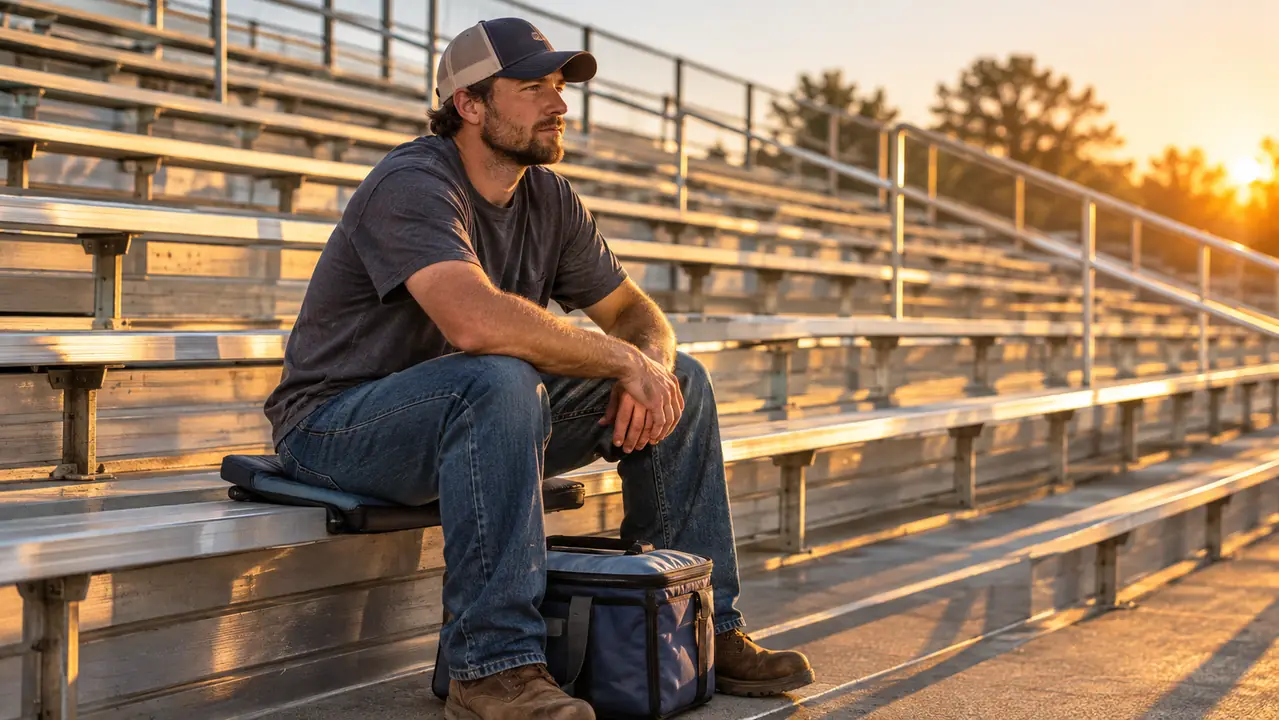
The zippers are the wear point on any soft cooler, and these have held. The main opening gets zipped and unzipped a hundred times a weekend and I have not had a slider jump a tooth or a pull tab come off in my hand. The seams at the corners, where the liner meets the fabric, are where I expected trouble. There is none. I paid for the Under Armour name expecting decent hardware and I got it.
The main zip will catch at one corner if you load the bag past the top, so I load it to about three quarters and then close it. If you cram it to the lid and force the zipper, you will win that argument once and lose the zipper eventually. That is not a design flaw, it is the nature of a soft-sided bag, and it is the one habit you have to build.
The thing I have replaced is nothing. That is not a boast, it is a note about how the gear gets kept. Between trips the cooler lives in the basement race room, on the floor beside the shelf of diecast cases, wiped out and left open to dry before it goes down there. Two seasons of that and the liner still smells like nothing at all, which is more than I can say for the soft cooler I owned before this one. That one went out with the trash in September of its first year.
The genuine complaint I have is cosmetic. The fabric shows track dust. Two days at Talladega and it looks like it has been to Talladega, which it has. It wipes clean and it does not stain, but if a spotless cooler matters to you, this one will spend its life looking like it has been used. It has been used.
What I Liked
- Twelve cans plus ice in a bag that carries one-handed up grandstand steps
- Insulated quick-access lid means you reach down without standing up
- Rigid interior liner wipes clean in a parking lot in about a minute
- Two exterior zip pockets keep batteries and sunscreen out of the cold
- Built-in fence hooks get it off the concrete and out of the aisle
- Lifetime warranty per the listing
Where It Falls Short
- Ice is water by midafternoon on a hot Sunday
- Twelve cans is not enough for more than two people
- The zipper catches at one corner if you overpack it
- Fabric shows track dust and needs a wipe down after every trip
Who This Is For
This is for the fan who drives to the track, parks in a lot, and walks in with everything in his hands. The Under Armour Sideline Pro is a day bag first and a cooler second, and that is exactly right for the grandstand. If your Sunday starts with a cooler in one hand and ends with it in the other, a bag that weighs a pound empty and rides against your leg is a different experience than a plastic box with a handle that cuts into your fingers by the second row of steps.
It is also for the fan who sits in the grandstands rather than a suite or an RV lot, because that is where the carrying problem lives. And it is for anybody whose knee, back or shoulder has started voting in these decisions. Mine voted two seasons ago and I listened.
Who Should Skip It
Skip it if you are packing for four or more people. Twelve cans sounds like plenty until it is ninety degrees and everybody is thirsty at once. Get the 24 can version, or admit you need a hard cooler and a friend to help carry it, and plan accordingly.
Skip it if you tailgate out of the truck bed for six hours before the race even starts. A soft cooler is a day bag, not a base camp. And skip it if having ice at the end of the day is the point for you, because you will not get it here, and no amount of hoping changes that. Check your own track's posted cooler policy as well, since rules on size and type vary from one facility to the next.
Two seasons, four race weekends, and it still zips
If your race day starts with a walk from the parking lot, this is the cooler that made that walk easier for me. Check the size against your track's posted cooler policy, then look at the current listing.
Amazon Check Today's Price on Amazon →