
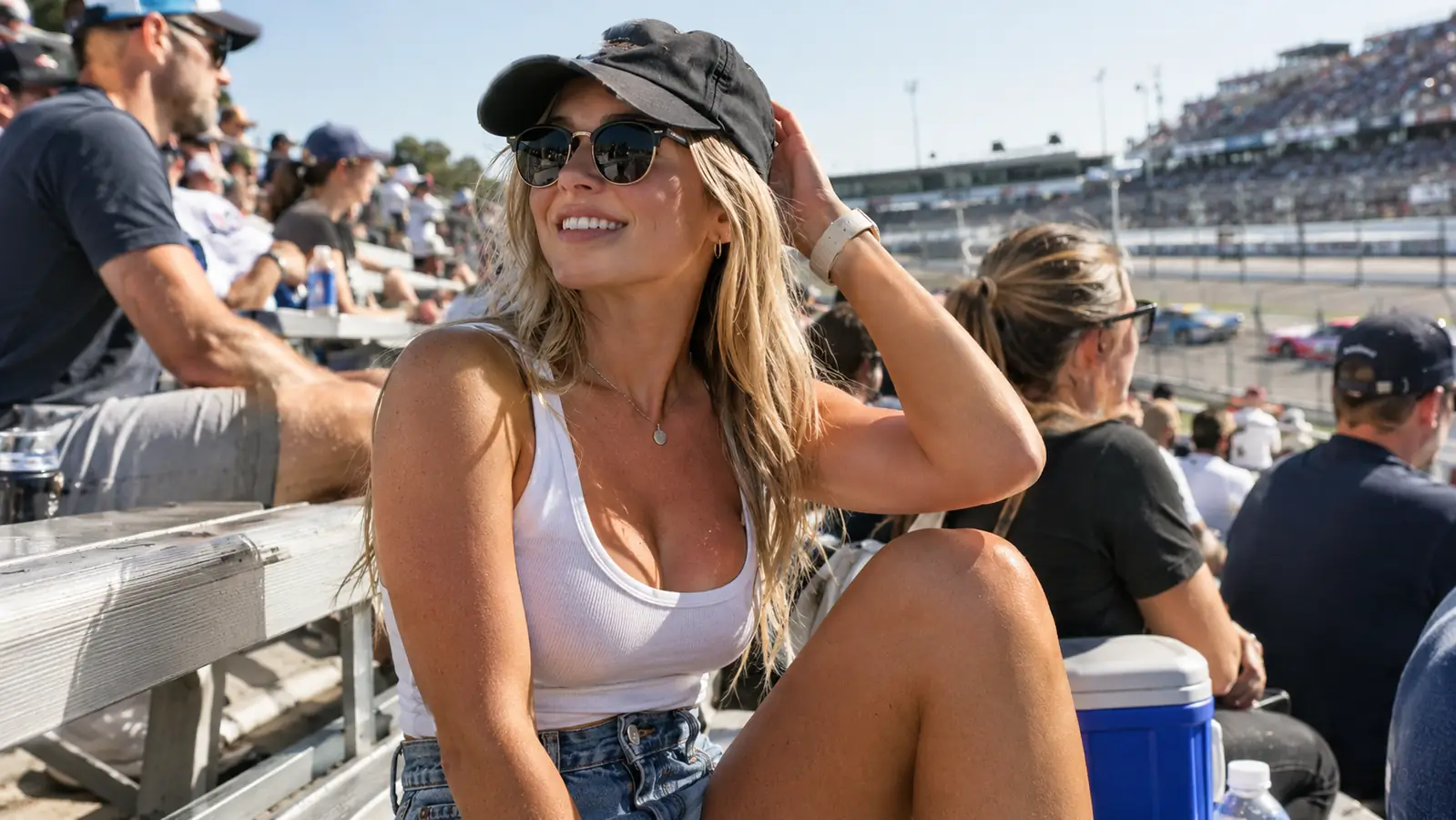
The first hot race weekend I packed for like a rookie, I treated the grandstands like a couch with better noise. I wore a dark shirt, no cap, and I paid for it across the back of my neck. That was Talladega in September, and the sun did not care that football was starting. I have been going to the spring race at Bristol and the fall race at Talladega for years, and I still see people make the same mistake every season. A hot race weekend is not a beach day with engines. You are sitting on aluminum, in the sun, for hours, with a cooler at your feet and a walk back to the truck that feels twice as long as it did that morning.
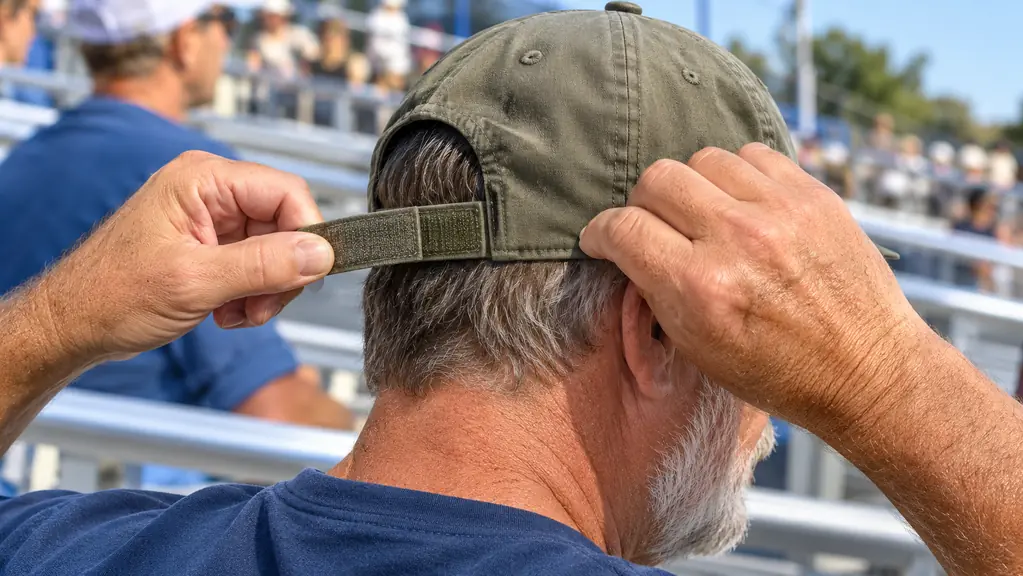
Now I start with my head. The cap I wear is a FirstCos Talladega Nights cap, a gift from my son two years ago as a joke about my Talladega trips. It is a novelty movie-themed cap, not official NASCAR team merchandise, and I say that plainly because you should know what you are buying. It is cotton, it has a hook-and-loop adjustable strap, and it is rated at 15 sun protection factor. It gets laughs in the grandstand. It also does the job I need, which is to keep the sun off my face and stay on while I am carrying a seat cushion and a cooler.
Start with a cap that can take a hot afternoon
The FirstCos Talladega Nights cap is cotton, adjustable with a hook-and-loop strap, and rated at 15 sun protection factor. It is a novelty cap, not team-issued gear. For a long day in the stands, that is the right place to begin.
Amazon Check Today's Price on Amazon →Step 1: Pick a Cap You Will Actually Keep On
A cap only works if you leave it on. I have watched people buy a stiff hat at the souvenir stand, wear it for an hour, and then stuff it in a bag because it presses on their head or blocks their view. The FirstCos cap has a hook-and-loop strap, so I can loosen it when the afternoon heats up and tighten it when the wind picks up. That adjustability matters more to me than a logo.
The brim is the part that does the visible work. It keeps the sun out of your eyes when the cars come down the front stretch, and it gives your face a little shade while you are reading a scanner or checking a lineup. The cap is rated at 15 sun protection factor. That is a start, not a force field. I still put sunscreen on my ears, my nose, and the back of my neck. The cap is the first layer, not the whole plan.
Cotton is the other reason I keep reaching for it. It is not waterproof, and I do not pretend it is. If a shower blows through, the cap gets wet and stays wet for a while. But cotton is quiet against the head, and mine has held up through two seasons of Talladega weekends and plenty of yard work. The fitted shape plus the strap gives me a cap that stays put without feeling like a clamp. If you have a head that falls between sizes, that combination is worth more than a fancy logo.
Step 2: Dress for the Seat, Not the Parking Lot
The parking lot is where people make their first mistake. They dress for the walk from the truck, then sit in the sun for four hours. A light-colored, loose long-sleeve shirt is not a fashion statement. It is shade you can wear. I would rather have a thin long-sleeve shirt and a cap than a sleeveless shirt and a sunburn. The goal is to keep the sun off your skin and let air move.
Dark cotton holds heat. I learned that at Bristol one spring when the forecast said 78 and the grandstand said something closer to 90. Now I wear a light shirt, light shorts, and a cap. If the day is going to be really hot, I bring a bandana to wet down and put around my neck. That is not a product endorsement. It is a cheap way to feel human again at the halfway point.
The other part of dressing for the seat is your back and legs. Aluminum benches get hot, and they get hard. A pair of shorts that let you sit without binding is better than jeans. A shirt that does not need constant adjusting is better than a polo that clings. You are not dressing for a photo. You are dressing for a long sit, a lot of standing, and a walk back to the truck when your left knee is already tired.
Step 3: Wear Shoes You Can Walk In and Shorts You Can Sit In
I have a bad left knee, so I am picky about shoes. The walk from the parking lot at Talladega can feel like a hike, and the stairs in the grandstand are no joke. I wear a broken-in closed-toe shoe with a real sole. Not sandals. Not something I bought the day before. If your feet are done by the time the green flag drops, the rest of the day is a grind.
Shorts are fine, but pay attention to the seat. If you are on aluminum, a thin pair of shorts will remind you exactly how hot that bench is. I bring a small towel or a bandana to sit on if I am not carrying the stadium seat. It sounds like a small thing. It is not. A hot seat makes you shift every few minutes, and by the end of the race your back is talking to you.
A light rain jacket is worth keeping in the truck even on a hot forecast. I have been at Bristol when the sky went from bright to gray in twenty minutes. I did not need a parka. I needed something I could throw on and take off. The same goes for a dry t-shirt in the truck for the ride home. You will be surprised how much better you feel after you change out of a sweaty shirt before you drive.
Step 4: Pack the Cooler and Seat Like You Mean It
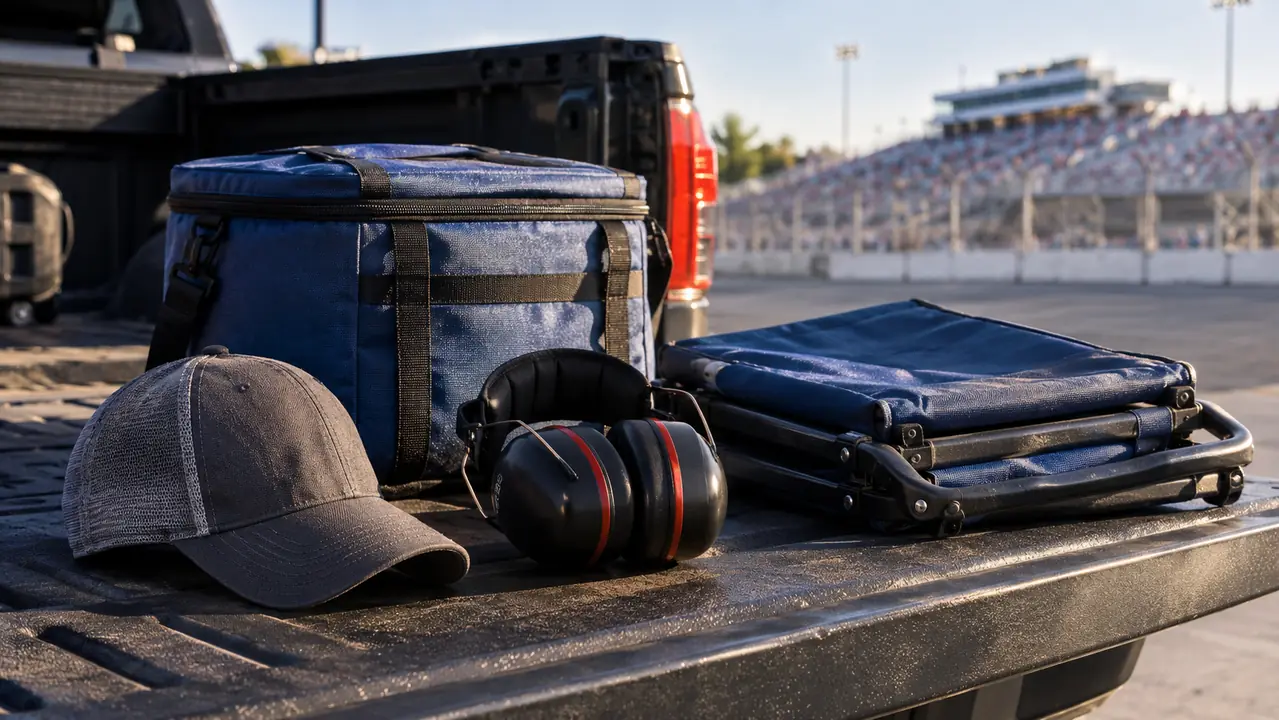
The two things that make the biggest difference for me are a stadium seat and a cooler. We own two Everlasting Comfort stadium seats, one for me and one for Linda, bought before the Bristol spring race two seasons ago. They are memory foam, they have an adjustable backrest, they fold flat, and they weigh about 2.2 pounds. They clip onto the aluminum grandstand bench seats. My bad left knee and my low back are the reason we bought them, and they are the reason I can stay for the whole race.
The cooler is an Under Armour Sideline Pro soft cooler. We have had it for two seasons, and it holds 12 cans plus ice. It has an insulated quick-access lid, two zip pockets, and fence hooks. I carry it into the grandstands at both tracks. The one thing I will not do is tell you it meets your track's cooler rules. Every track posts its own size and bag policy, and those rules change. Check the policy for the track you are going to before you pack. A cooler that gets turned away at the gate is just a heavy bag.
For hearing, I use a Rugged Radios H41 behind-the-head headset. I have had it for three seasons, and I plug it into my own handheld race scanner through the 3.5mm input jack. It has 24 NRR hearing protection and a volume control. The behind-the-head band is the reason I can wear it with a cap. An older over-the-head headset pressed on my glasses all day, and I was done with it. I have never used the boom microphone to talk to anyone. I listen to team radio and the broadcast. Linda wears foam earplugs instead. That is the system that works for us.
Step 5: Treat Sun and Water Like Gear, Not Extras
A cap rated at 15 sun protection factor is a first layer. It is not a substitute for sunscreen. I put sunscreen on before I leave the hotel, and I bring a small stick for my ears, nose, and neck. I reapply at the truck or at a shade break. The sun in the grandstand is not the same as the sun in your backyard, because you are sitting still and you do not notice how long you have been out.
Water is the other thing people underpack. I freeze a couple of bottles and put them in the cooler. They keep the other drinks cold and they give me something cold to drink late in the day. I also bring a salty snack. You are sweating more than you think, and a bag of peanuts and a bottle of water will do more for you than another souvenir. I keep a hat towel or a bandana in the bag to wet down when the heat gets to me.
The last part is the walk back. I park where I can get out without a fight, even if it means a longer walk in. I keep a dry shirt and a pair of flip-flops in the truck for the ride home. I am not trying to look sharp at that point. I am trying to get out of the sun, get the AC going, and not be miserable for the two hours back to Hamilton. A hot race weekend is a lot more fun when you plan the end of it, not just the start.
A cap rated at 15 sun protection factor is a first layer, not a whole plan. The rest of the outfit has to do the same job.
What Else Helps
A few small things make the day easier. Sunglasses with a strap so they do not slide down your nose. A bandana. A small towel. A power bank for your phone if you are using a scanner app or taking photos. A scanner and a headset if you want to hear the team radio. Linda and I have our own system, and it has been built around what we actually use, not what looks good in a catalog.
The cap is still the piece I reach for first. My FirstCos cap lives in the race bag between trips. It is a novelty cap, and it is not official NASCAR gear, but it does what I need. It keeps the sun off my face, it stays on with the hook-and-loop strap, and it gets a laugh from the people around us. If you are buying one for a hot race weekend, buy it for the fit and the coverage, not because you think it will make you look like a team member.
Check your track's rules before you go. Check the cooler policy, the bag policy, and the clear bag rules if they have them. Bring less than you think you need, but bring the things that keep you in your seat. A hot race weekend is not a contest to see who can rough it the hardest. It is a long day, and the goal is to walk back to the truck with a little energy left.
The cap that starts the whole outfit
The FirstCos Talladega Nights cap is cotton, adjustable with a hook-and-loop strap, and rated at 15 sun protection factor. It is a novelty movie-themed cap, not official NASCAR team merchandise. Pack it first, then build the rest of your race day around it.
Amazon Check Today's Price on Amazon →